
Fertigung eines CASCADE-Moduls
Aktuell verwendete GEM-Folien
Konditionierung
Beschichtung
Spannen der GEM-Folien
CASCADE GEM-Modul
CASCADE Detektor-Modul
Ein CASCADE-Detektor besteht im Wesentlichen aus einer Kaskade von mehreren hintereinader montierten GEM-Folien. Zu diesem Zweck wird jeweils eine GEM-Folie auf einen Rahmen geklebt, ein sogenanntes Modul. Ein kompletter Detektor besteht aus einem Stapel von bis zu 10 solcher Module. Diese Module sind gegeneinander gasdicht und können, im Falle eines Defekts an einer einzelnen GEM, leicht ausgetauscht werden.
Im Folgenden werden die einzelnen Arbeitsschritte bei der Fertigung eines CASCADE-Moduls kurz vorgestellt. Dabei konnte vor allem beim Spannen und Kleben der GEM-Folien auf das Know-How und die langjährigen Entwicklungsarbeiten in der HERA-B-Arbeitsgruppe von Herrn Prof. Eisele zurückgegriffen werden. Die Fertigung eines CASCADE-Moduls ist eine direkte Fortentwicklung dieser Technik, welche bereits beim Bau des Inner-Trackers von HERA-B mit über 200 gefertigten Detektoren eindrucksvoll seine Serientauglichkeit bewiesen hat.
Aktuell verwendete GEM-Folien
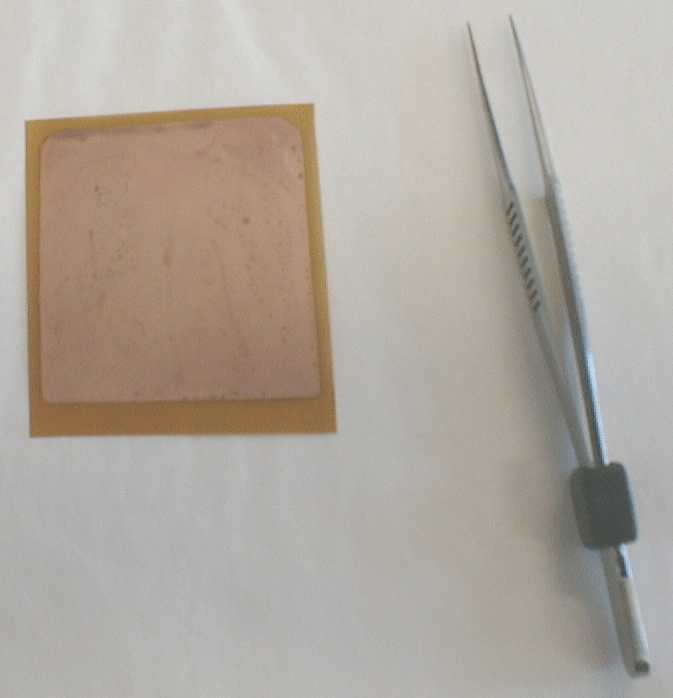 aktive GEM-Fläche ca. 5 cm x 5 cm |
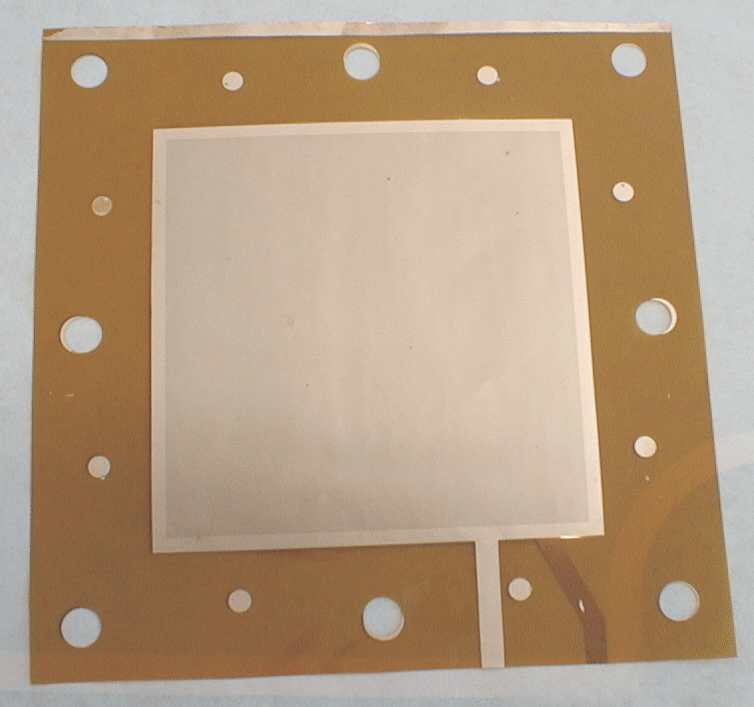 aktive GEM-Fläche ca. 10 cm x 10 cm |
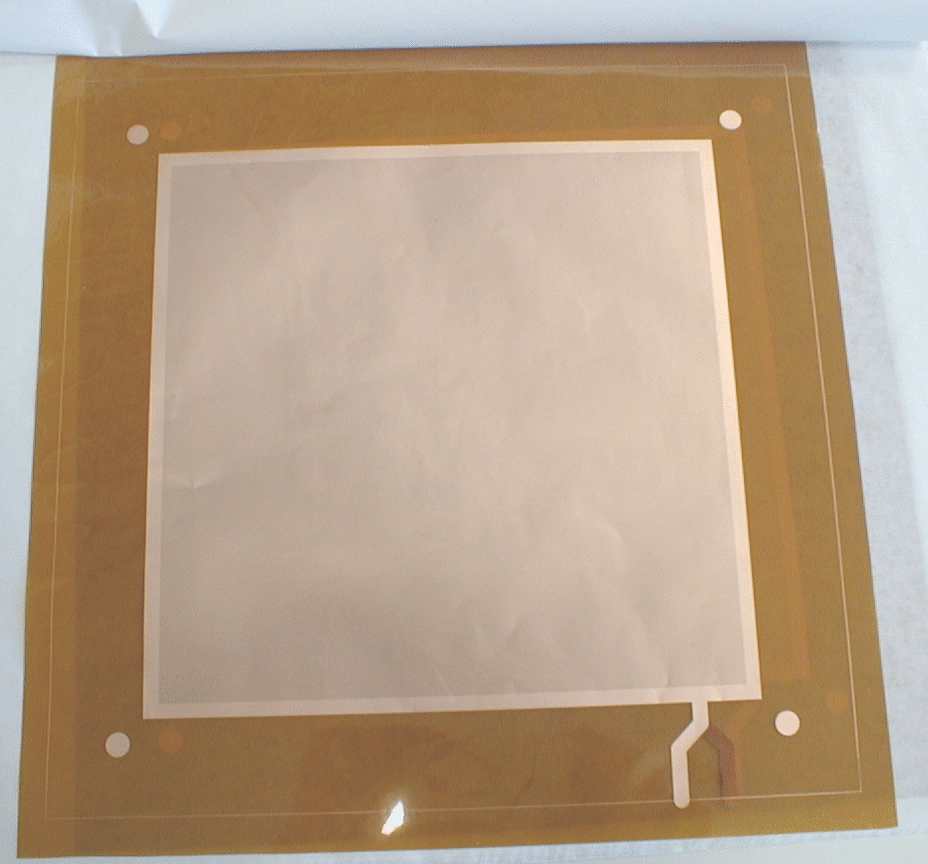 aktive GEM-Fläche ca. 20 cm x 20 cm |
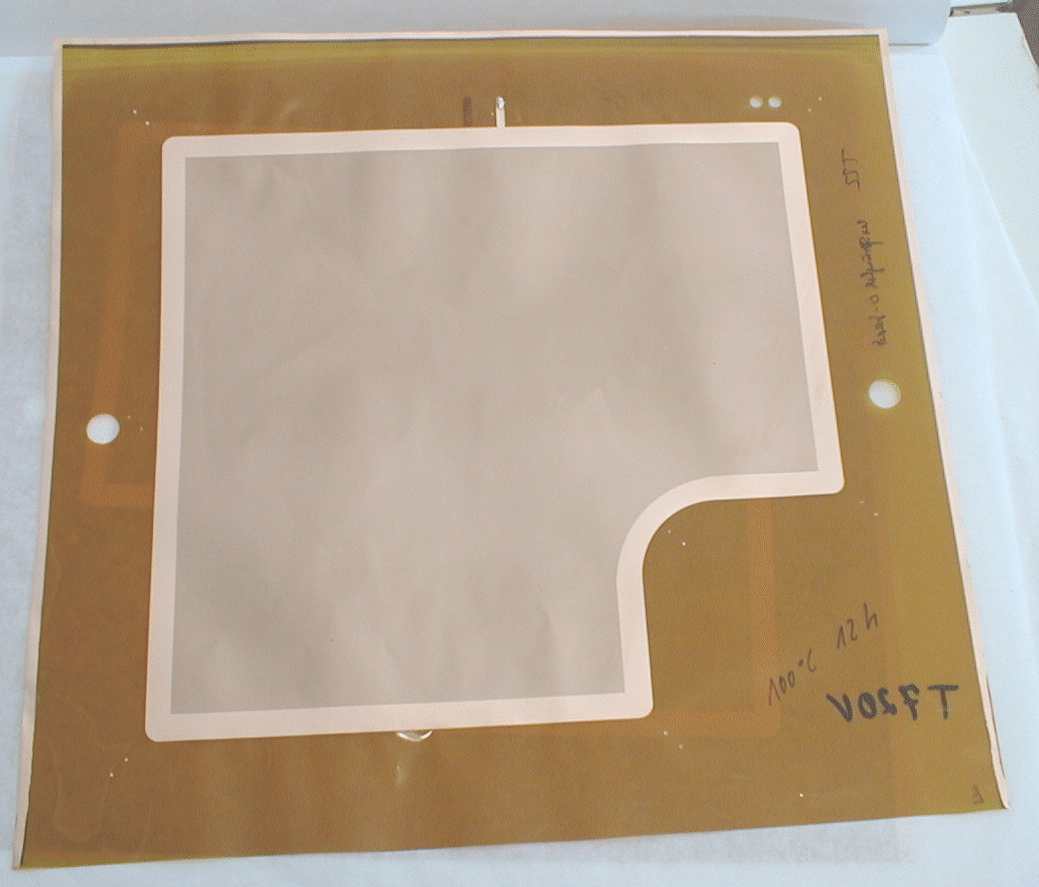 aktive GEM-Fläche ca. 25 cm x 25 cm (HERA-B-Geometrie) |
Konditionierung
| Neue GEM-Folien, die direkt aus der Produktion kommen, besitzen zunächst keine besonders gute Hochspannungsfestigkeit. Deswegen müssen sie zunächst in einer speziellen Prozedur langsam an Hochspannung "gewöhnt" werden. Dies bezeichnet man als Konditionierung. Wird eine unkonditionierte GEM innerhalb weniger Minuten auf ihre Betriebsspannung hochgefahren, so kommt es in den meisten Fällen bereits vor Erreichen dieser Spannung zu einem Überschlag zwischen den Kupferschichten der GEM. An der Stelle des Überschlags wird das Kapton der GEM karbonisiert, so daß Ober- und Unterseite der Folie kurzgeschlossen sind und die Folie somit unbrauchbar ist. An konditionierten GEM-Folien kann hingegen die Spannung ohne die Gefahr eines Defekts innerhalb weniger Minuten hochgefahren werden. | 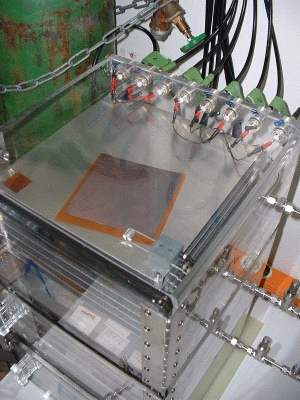 Flowboxen zum automatisierten Konditionieren der GEM-Folien unter Schutzatmosphäre |
Beschichtung
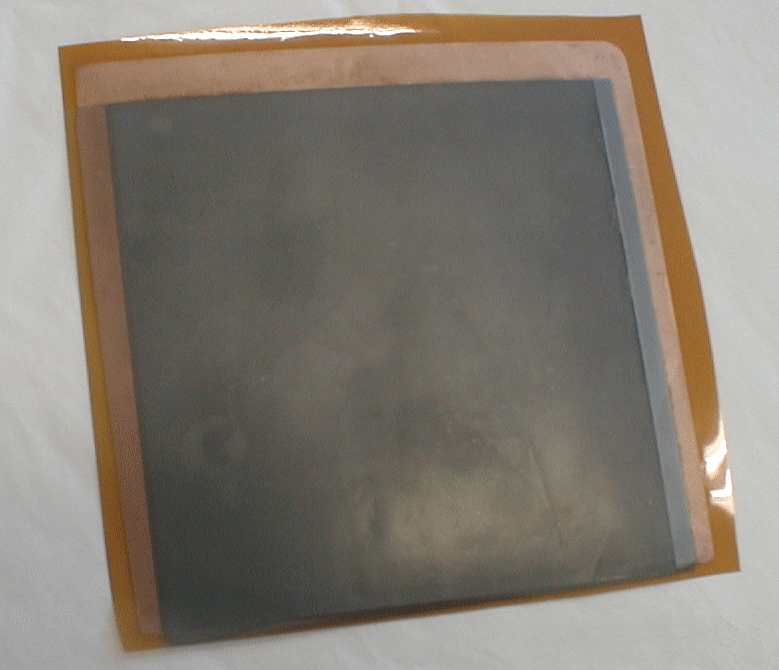 GEM-Folie mit einer ca. 650 nm dicken 10Bor-Schicht |
Verschiedene industrielle Methoden zur Erzeugung von Borschichten, wie z. B. CVD-Verfahren, sind aufgrund der dabei auftretenden hohen Prozeß-Temperaturen für die Beschichtung von GEM-Folien (Kapton ist nur bis ca. 250 °C stabil) nicht geeignet. Zur Zeit werden die Borschichten mittels Elektronenstrahlverdampfen auf den Folien abgeschieden. Der Bedampfungsprozeß ist derart optimiert, daß die Hochspannungsfestigkeit auch bei den beschichteten Folien erhalten bleibt. |
Spannen der GEM-Folien
| Um eine höchstmögliche Feldhomogenität zwischen den GEM-Folien zu wahren, müssen die Folien möglichst straff auf die Rahmen gespannt werden. Aus diesem Grund werden die GEMs vor der Klebung auf einem Spanntisch vorgespannt. |
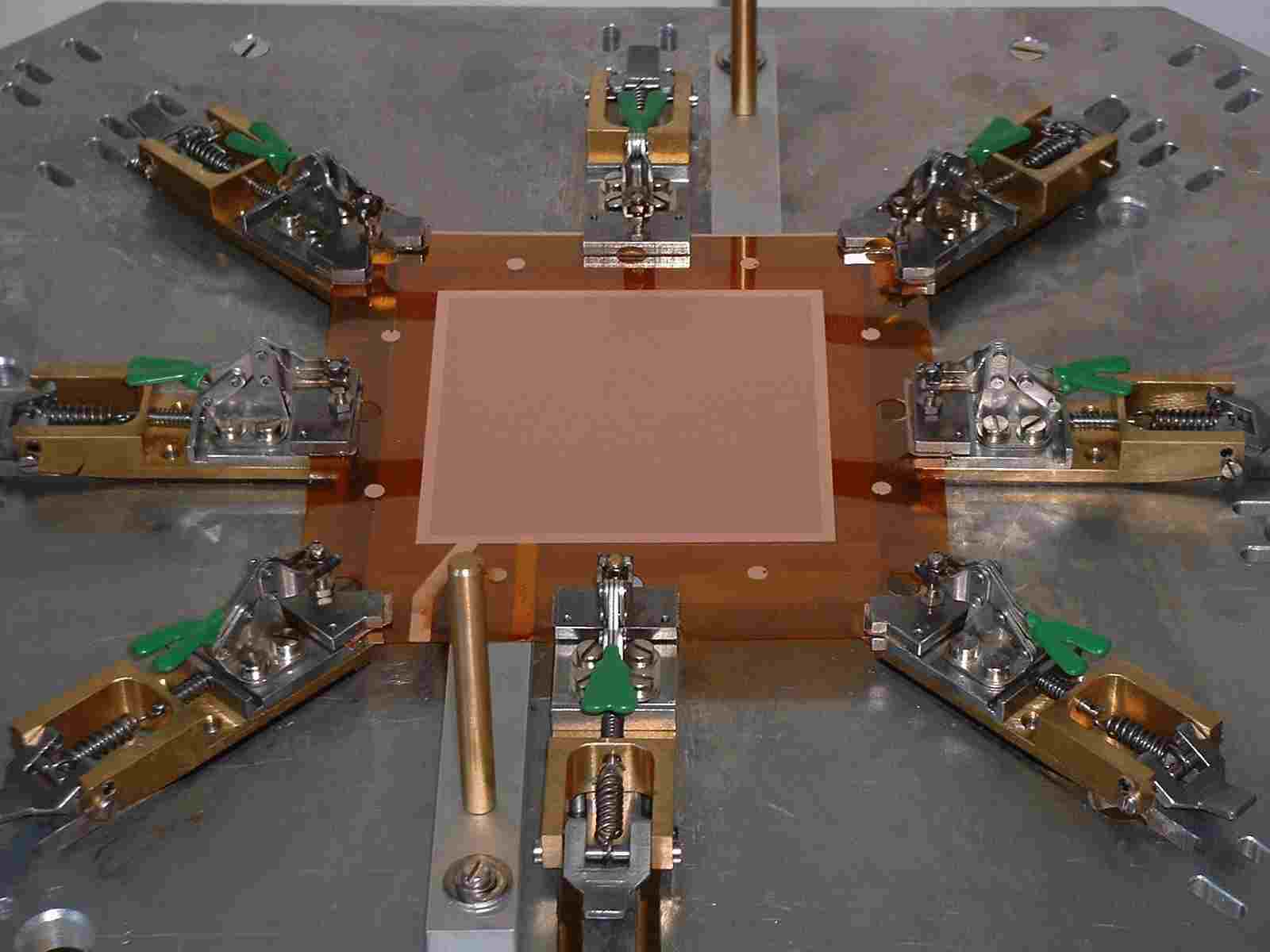 vorgespannte GEM-Folie bereit zur Klebung auf einen Rahmen |
GEM-Modul
| Die Abbildung zeigt ein fertiges GEM-Modul: eine gespannte GEM-Folie, die hier auf einen Glas-Rahmen geklebt wurde. | 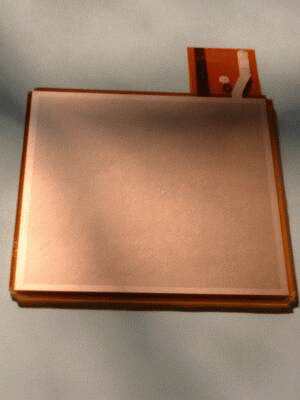 |
CASCADE Detektor-Modul
 |
Mehrere solcher GEM-Module werden zu einem CASCADE-Detektor übereinander gesetzt, mit Deckeln und Versorgungsleitungen versehen. |
Im Rahmen von Diplomarbeiten soll das Fertigungsverfahren weiter verbessert und auf Modulgrößen von 300mm x 300mm angewandt werden. Interessierte StudentInnen sind jederzeit herzlich eingeladen, sich vor Ort bei uns zu informieren.
